
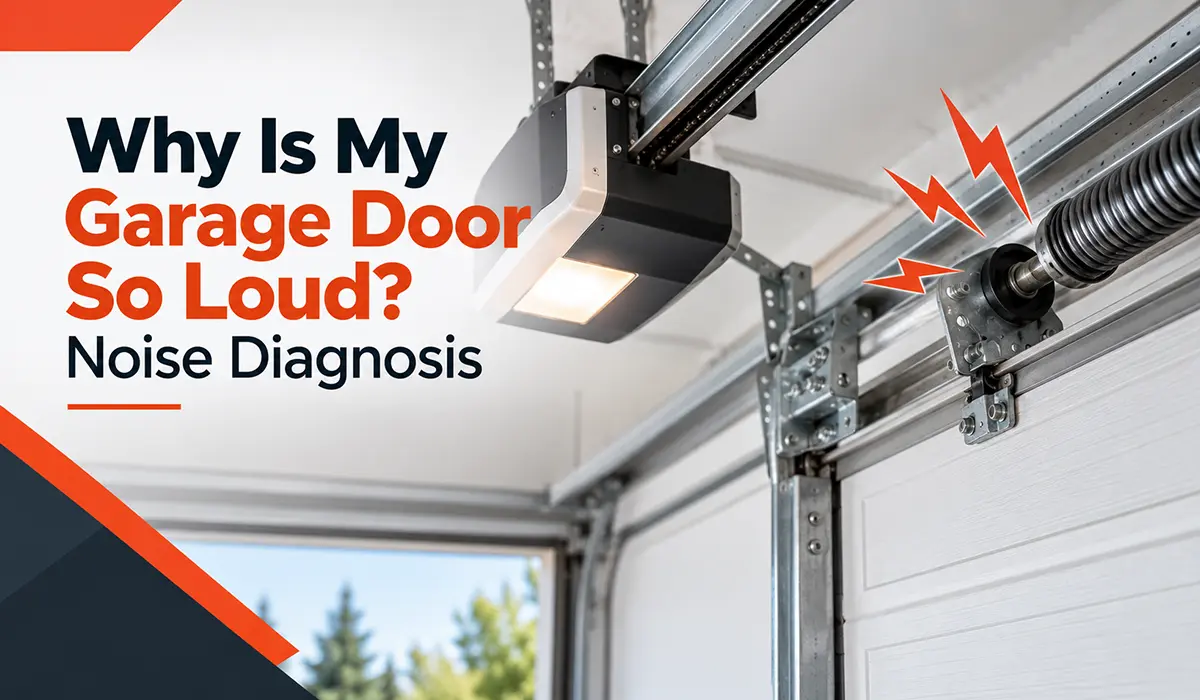
A loud garage door is usually caused by dry, loose or worn hardware, and the sound itself tells you which part is the problem. Squeaking points to dry hinges, rollers or springs. Rattling means loose bolts or brackets. Grinding usually comes from worn rollers or a worn opener gear. A single loud bang often means a broken spring. Most squeaks and rattles can be fixed in about 15 minutes with a wrench and the right lubricant, but grinding, scraping and banging need a professional.
This guide walks you through each type of garage door noise, what causes it, what you can safely fix yourself, and when it is time to call. It also covers why Calgary winters make garage doors louder.
Match Your Garage Door Noise to the Likely Cause
Start with this table. Find the sound that matches yours, then read the section below it.
| Sound | Most likely cause | DIY fix? | When to call a pro |
|---|---|---|---|
| High-pitched squeak | Dry hinges, rollers or springs | Yes, lubricate | If it returns within weeks |
| Rattling or vibrating | Loose hardware or opener mounting | Yes, tighten bolts | If the track or brackets are loose |
| Rumbling or rolling noise | Worn or steel rollers | Not recommended | Roller replacement |
| Grinding | Worn rollers, dry bearings or opener gear | Lubricate first | If it continues or gets worse |
| Scraping or rubbing | Bent track or misaligned door | No | Same week |
| Popping or cracking | Cold-weather contraction or spring wear | Lubricate | If the door also feels heavy |
| One loud bang | Broken spring | No | Right away |
| Chain slapping or jerking | Loose chain or worn drive | Sometimes | If it persists |
| Humming but no movement | Broken spring, disconnected trolley or failed gear | No | Right away |
| Clicking from the opener | Failing relay, board or gear | No | Within the week |
Squeaking and Squealing
What it sounds like: A high-pitched squeal each time the door moves, often louder at the start.
What causes it: Dry metal rubbing on metal. The usual sources are:
- Hinges
- Roller stems and bearings
- Spring coils
- Centre and end bearing plates
What you can do: Lubricate the moving parts with a lubricant made for garage doors. A silicone or lithium-based spray works well. Apply a small amount to each hinge, roller stem and bearing plate, and a light coat on the spring coils. Wipe off the extra so dust does not stick.
What not to do:
- Do not spray the tracks. Lubricant on the track attracts dirt and makes rollers slide instead of roll. Wipe the tracks clean with a rag instead.
- Do not rely on general-purpose sprays like WD-40. They clean and loosen but do not lubricate for long, and squeaks tend to come back.
- Do not lubricate a belt. Belt drives do not need it.
If the squeak returns within a few weeks, the part is worn, not just dry. Call us for an inspection. A garage door tune-up from $149 plus GST includes lubrication, a safety check and hardware adjustment.
Rattling and Vibrating
What it sounds like: A shaking or buzzing noise, often louder inside the house.
What causes it:
- Loose bolts on hinges, brackets or tracks
- Loose mounting bolts on the opener
- A loose chain or a worn chain guide
- Vibration passing through the ceiling joists
What you can do: Use a socket wrench to snug up the bolts on the hinges, the track brackets and the opener mounts. Tighten only. Do not remove anything.
Safety rule: Do not loosen or adjust the bottom brackets at the corners of the door, or anything attached to the spring system. Those parts are under high tension and can cause serious injury.
If you have a room above the garage: Rattles travel through the ceiling. Rubber isolators on the opener mount can cut that noise. A belt-drive opener helps even more.
Rumbling and Rolling Noise
What it sounds like: A deep rumble that follows the door along the track.
What causes it: Steel rollers, worn bearings or flat spots on the roller wheels. Basic steel rollers are the loudest option. Nylon rollers with sealed bearings run much quieter.
What you can do: Lubricate the roller bearings first. If the noise remains, the rollers are worn and need replacing. Roller replacement is a good upgrade for noise. It is also the fastest way to make an older door feel smoother.
Replacing rollers is a job for a professional, because some brackets and cables sit near spring tension. Our roller, cable and seal work starts from $199 plus GST.
Grinding
What it sounds like: A harsh metal-on-metal sound, either from the door or from the opener motor.
Grinding has several possible sources, so find out where it comes from.
Grinding from the door or track:
- Worn or damaged rollers
- Dry bearings
- A bent track or rough joint in the track
- Dirt or debris in the track
Clean the track and lubricate the rollers. If the noise stays, call us.
Grinding from the opener:
- A worn drive gear or sprocket
- A stripped plastic gear in an older opener
- A chain that has stretched and is rubbing
A grinding gear will not fix itself. If the opener is older, an inspection will tell you whether a gear replacement or a new unit makes more sense. Our guide to when to replace a garage door opener explains how to decide.
If you hear grinding plus a door that feels heavy, stop using the opener. The problem may be the spring, and forcing the door can make it worse. Read why you should never force the door open.
Scraping and Rubbing
What it sounds like: A dragging, scratching or scraping sound along the side or top of the door.
What causes it:
- A bent or misaligned track
- A door that is out of square
- A roller that has jumped the track
- Panels that have shifted or sagged
- The door rubbing the weatherstripping or the frame
This is not a DIY fix. A misaligned track is a safety issue, and forcing it can pull the door off its track. Stop using the door and book a visit. If the door looks bent or crooked, we may also need to check the cables.
Popping and Cracking
What it sounds like: Sharp pops or cracks, often in the morning or during a cold snap.
What causes it:
- Metal parts expanding and contracting with temperature swings
- Dry hinges and rollers
- Spring coils rubbing against each other
- Weatherstripping sticking to the frame
A little popping on a very cold morning can be normal. Lubricate the hinges, rollers and springs, and see if it fades once the garage warms up. If the popping continues all day, or the door is heavy or uneven, the spring may be worn. Call for an inspection before it breaks.
One Loud Bang
What it sounds like: A sudden bang from the garage, like a gunshot or a firecracker.
What causes it: Almost always a broken torsion spring. It often happens with the door closed, so you may only notice it later when the door will not open.
What to do: Stop using the door and the opener. Do not try to lift the door. Call a professional. Our guide on what to do when a spring breaks covers the safe steps and what a repair costs. Spring replacement starts at $349 plus GST.
Chain Slapping and Jerky Movement
What it sounds like: A clanking or slapping noise from the rail, or a door that starts and stops in jerks.
What causes it:
- A loose or stretched chain
- A worn chain guide
- A dry chain
- A drive carriage that is worn
Chain drive openers are the loudest type. Even a healthy chain drive makes some noise. If the chain is sagging, it may need to be tightened or lubricated. If the noise is constant and the opener is over 12 years old, a belt drive is a big step up. A modern belt drive is often noticeably quieter, which matters when a bedroom sits above the garage.
Humming With No Movement
What it sounds like: The opener runs and hums, but the door does not move or barely lifts.
What causes it:
- A broken spring (most common)
- A disconnected trolley or release
- A stripped drive gear
- A failed motor capacitor
First, check whether the red release cord has been pulled, which disconnects the door from the opener. If the door is closed, you can reset it. If the door is open or partly open, do not pull any cords. If the opener still hums with no movement, stop using it and call. The door may be unbalanced, and repeated button presses can damage the motor.
Clicking From the Opener
What it sounds like: Rapid clicking when you press the remote, with little or no door movement.
What causes it: A failing relay, a worn gear or a problem with the circuit board. Clicking from the wall unit alone can also be a sensor or wiring fault.
This is usually an opener repair, not a door problem. See our garage door opener repair service. Repairs start at $249 plus GST.
Why Garage Doors Get Louder in Calgary Winters
If your door is quiet in July and noisy in January, you are not imagining it. Calgary’s cold affects every moving part.
- Cold thickens lubricant. Old grease stiffens, and parts that slid easily in summer drag in winter.
- Metal contracts. Hinges, rollers and tracks fit differently at -25°C than they do at +20°C.
- Plastic gets brittle. Some older opener gears crack more easily in deep cold.
- Chinook swings change everything. A 20-degree jump in a few hours can shift the door’s balance and set off pops and creaks.
- Seals stiffen or freeze. A bottom seal stuck to the concrete makes the door work against ice. See our bottom seal replacement.
A little extra noise on the first open of a very cold morning is normal. If the noise stays after the door has run a few cycles, something needs attention. A fall tune-up before the first hard freeze is the easiest way to avoid winter noise.
A 15-Minute Routine to Quiet a Noisy Garage Door
Here is a safe routine most homeowners can do. Do it with the door closed and the opener unplugged.
- Tighten the hardware. With a socket wrench, snug the bolts on hinges, track brackets and the opener mount. Skip the bottom corner brackets and anything on the spring system.
- Clean the tracks. Wipe them with a clean rag. Do not lubricate them.
- Lubricate the moving parts. Apply garage door lubricant to hinges, roller stems, bearing plates and a light coat on the springs. Wipe off the extra.
- Check the chain. On a chain drive, it should have only a little slack. Lubricate it with a lithium-based lubricant.
- Do the balance test. With the door closed, pull the red cord and lift the door to waist height. It should stay in place. If it drops or flies up, call us.
- Plug the opener back in and run the door a few times. Listen for changes.
If the noise is still there, it is worth a professional look.
Is a Loud Garage Door Dangerous?
Sometimes. Noise is a warning sign. Squeaks and rattles are usually minor. These sounds are not:
- A loud bang
- Grinding that gets worse
- Scraping along the track
- A door that shakes, jerks or sits crooked
- Burning smells from the opener
- Metal shavings on the floor or under the opener
Any of these can point to a safety problem. Stop using the door and call.
Can a New Opener or Door Fix the Noise?
It can help, but find the cause first. Here are the most effective upgrades for noise:
- Nylon rollers with sealed bearings are the best low-cost fix for a rolling rumble.
- A belt-drive opener is much quieter than a chain drive. Learn more in our opener replacement guide. New openers start at $749 plus GST.
- A wall-mount (jackshaft) opener moves the motor to the side of the door and cuts vibration through the ceiling.
- An insulated door dampens sound better than a single-layer steel door. If your door is damaged as well as noisy, look at new garage door installation.
- Rubber isolators on the opener mount reduce vibration.
What a Professional Noise Diagnosis Includes
When we diagnose a noisy door, we do the following:
- Listen to the door and the opener through a full cycle
- Check spring balance and condition
- Check cables, drums and pulleys
- Inspect the rollers, hinges and tracks
- Check the opener gear, chain or belt, and mounting
- Test the safety sensors and auto-reverse
- Lubricate and adjust what we can on the spot
- Give you a clear written price for anything that needs replacing
If the fix is a quick adjustment, we will tell you. There is no weekend surcharge.
Garage Door Noise Diagnosis Across Calgary
We help homeowners in the south and southeast of Calgary and nearby communities:
- Shawnessy
- Bridlewood
- Cranston
- Evergreen
- McKenzie Towne
- Auburn Bay
- Legacy
- Aspen Woods
- Mahogany
- New Brighton
- Seton
- Walden
Frequently Asked Questions
Why is my garage door suddenly so loud?
A sudden change in noise usually means a part has worn, loosened or failed. Common causes are dry hinges and rollers, loose bolts, a worn opener gear or a weakening spring. If the door also feels heavy or the noise is a bang or grind, stop using it and call a professional.
Why does my garage door squeak when it opens?
Squeaking usually means dry metal on metal at the hinges, rollers, bearings or springs. Apply a garage door lubricant to those parts and wipe off the extra. Do not lubricate the tracks. If the squeak returns in a few weeks, parts are worn and need inspection.
What lubricant should I use on a garage door?
Use a silicone or lithium-based lubricant made for garage doors. Apply it to hinges, roller stems, bearing plates and a light coat on the springs. Avoid general-purpose sprays like WD-40, and do not lubricate the tracks or a belt drive.
Why is my garage door louder in winter?
Calgary’s cold thickens lubricant, shrinks metal parts and makes some plastic gears brittle. Chinook swings also change the door’s balance. A little noise on the first cycle of a cold morning is normal. Noise that stays after a few cycles needs a tune-up.
Why does my garage door bang when it closes?
A bang when closing is often a door that is out of balance, a loose hinge or a roller hitting a track joint. If you hear one loud bang when no one is near, a spring may have broken. Stop using the door and call.
How much does it cost to fix a noisy garage door in Calgary?
A garage door tune-up starts at $149 plus 5% GST. Roller, cable and seal work starts at $199. Opener repair starts at $249 and spring replacement at $349. We diagnose the noise first and give you a written price before any work.
How can I make my garage door quieter?
Tighten the hardware, lubricate the hinges, rollers and springs, and clean the tracks. For lasting results, upgrade to nylon rollers with sealed bearings, add rubber isolators to the opener, or switch to a belt-drive opener. An insulated door also reduces sound.
Is a noisy garage door a safety problem?
It can be. Squeaks and light rattles are usually minor, but bangs, grinding, scraping, jerky movement or a crooked door can signal a spring, cable or track problem. Stop using the door and book a professional inspection.
Get Your Loud Garage Door Checked in Calgary
Not sure what that sound is? Call us and describe it. We will tell you if it is a quick fix or something to check right away, and we will give you a clear written price before we start.
Fish Creek Garage Door Repair Calgary #280, 23 Sunpark Drive S.E., Calgary, AB T2X 3V1 Phone: +1 587 893 3737 Email: fishcreekgaragedoor@gmail.com
