
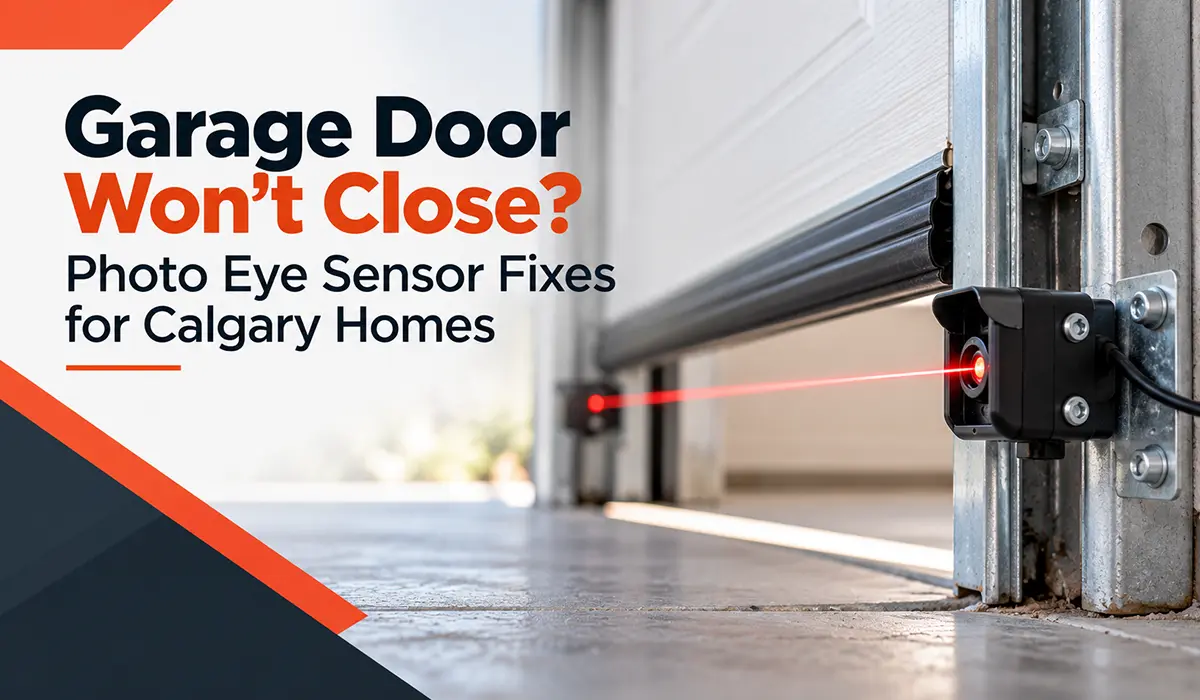
If your garage door starts down and then reverses, or will not close at all while the opener light blinks, the cause is almost always the photo eye safety sensors near the floor. They are blocked, misaligned, dirty, or blinded by the sun, and the opener refuses to close because it cannot confirm the doorway is clear. The good news is that most of the time you can fix this yourself in a few minutes, and it usually costs nothing.
This guide walks you through it step by step, explains the winter causes we see across Calgary, and covers when to call a technician for garage door opener repair instead.
What the photo eye sensors do
Every garage door opener made since 1993 has a pair of photo eye sensors, sometimes called safety reversing sensors. They sit about six inches off the floor, one on each side of the door, and one shoots an invisible infrared beam across to the other. If anything breaks that beam while the door is closing, the opener stops and reverses so the door cannot come down on a child, a pet, or a car. So when your door will not close, the safety system is usually doing exactly its job. The trick is finding what is breaking the beam.
First, confirm it is the sensors
There is a quick test. Press and hold the wall button inside the garage, keeping constant pressure on it. If the door closes fully while you hold the button but not with a normal press, the fault is in the sensors or their wiring, not the opener or the door itself.
One important note. Holding the button is only a short-term way to secure your home, not a fix. The sensors are there to prevent a serious injury, so do not leave them disabled. Work through the steps below and get the safety system working again.
Photo eye sensor fixes, step by step
Work through these in order. Most doors are closing normally again by step five.
- Cut the power first. Before you touch a bracket, switch off the opener at the breaker or unplug it, so the door cannot move while your hands are near it.
- Clear the beam path. Look along the invisible line between the two sensors, about six inches off the floor, and remove anything in the way. In winter this often means a snow shovel leaned against the wall, a bag of ice melt, or snow that blew in near the door.
- Wipe both lenses. Use a soft, dry or barely damp cloth on each lens. Frost, condensation, dust, cobwebs, and the salty film that builds up over a Calgary winter all block the beam. Skip harsh solvents, which can cloud the plastic.
- Read the little lights. Each sensor has a small indicator light. The sending side should glow steady at all times. The receiving side glows steady only when it can see the beam. If the receiving light is off or flickering, the sensors are still blocked or out of alignment.
- Realign the sensors. Loosen the wing nut or screw on the bracket of the sensor with the bad light, just enough to pivot it by hand. Aim it straight at its partner and move it slowly until the receiving light stops flickering and glows solid. Tighten the bracket back down without overtightening, which can nudge it out of line again.
- Check for sun glare. If the door only refuses to close at certain times of day, low sun may be shining straight into the receiving sensor and washing out the beam. This is common in a Calgary winter when the sun sits low in the sky. Shading that sensor with a small hood or a piece of cardboard confirms it.
- Inspect the wiring. Follow the thin wires from each sensor back toward the opener. Look for loose terminals, frayed or pinched spots, corrosion, or chew marks. Cold makes old wire insulation brittle, so winter is often when marginal wiring finally gives out.
- Power cycle the opener. Restore power, then unplug the opener for about a minute and plug it back in to reset its logic board. Now test the door. If it closes smoothly without reversing, you are done.
Quick diagnosis by what you see
Use the lights and the timing to narrow it down fast.
| What you see | Likely cause | What to do |
|---|---|---|
| Door reverses right away and the opener light blinks | Sensors blocked or misaligned | Clear the path, clean the lenses, realign |
| Receiving light is off or flickering | Misalignment or a dirty lens | Wipe the lens, then re-aim until it is solid |
| Sending light is off as well | No power or a wiring fault | Check the power and inspect the wiring |
| Door only fails to close in the afternoon | Sun glare hitting the receiver | Shade the sensor from direct sun |
| Both lights solid but the door reverses on the way down | Something physical in the path, often packed snow or ice at the threshold | Clear the threshold; if it persists, book a garage door tune-up to check the force settings |
Why this happens more in a Calgary winter
Sensor calls climb every winter here, and the reasons are all things our climate throws at that little pair of eyes six inches off the floor.
- Low sun glare: The winter sun sits low on the horizon and can shine straight into the receiving sensor, overpowering the beam. A door that only balks in the afternoon is often a glare problem.
- Frost and condensation: A cold garage with big temperature swings pulls moisture onto the lens, where it can freeze into a thin film that blocks the beam.
- Salt and grit film: Calgary roads get heavily sanded and salted, and that grit rides in on your tires and boots. It coats the lenses over the season and dims the signal.
- Snow in the path: Snow blown in near the door, or a drift at the threshold, can sit right in the beam path and stop the door from closing.
- Brittle wiring: Deep cold makes old wire insulation brittle and can crack a marginal connection, so a sensor that was fine in October starts faulting in January.
If your door was fine and started reversing once the cold set in, start with the lenses and the sun angle. Those two account for most winter sensor calls.
One thing to never do
Do not disable or permanently bypass the sensors. It can be tempting when the door will not cooperate, but those sensors are a legally required safety feature that stops the door from closing on a person, a pet, or a vehicle. Bypassing them removes that protection entirely. The hold-the-button trick is only for securing your home in the moment. Fix the sensors so the safety system works the way it should.
When to call a technician
Most sensor issues are a five-minute fix, but some point to a real repair. Call a professional if:
- The wiring is frayed, corroded, pinched, or chewed by rodents, and you aren’t comfortable repairing it.
- You have cleaned, realigned, and power cycled, and the door still won’t close.
- The sending light won’t come on at all, which can mean a dead sensor or a broken wire.
- The sensors are cracked, water damaged, or worn out and need replacing as a pair.
- The door reverses even with both lights solid, which points to the tracks, rollers, or opener force settings. If the door has come off its track, see our guide on a garage door off track.
- The opener itself is failing. That may mean a repair or garage door opener replacement rather than a sensor fix.
If the opener works from the wall button but not from your remote, that is a separate issue. Our keypad and remote service covers it, and our post on an opener that won’t respond helps you sort it out.
Frequently asked questions
Why won’t my garage door close but the opener light blinks?
A blinking opener light is a built-in error signal. It almost always means the photo eye safety sensors near the floor cannot see each other, so the opener refuses to close. The usual reasons are a blocked beam, misaligned sensors, dirty or frosted lenses, sun glare on the receiver, or a wiring fault. Clear the path, wipe both lenses, and realign the sensors until the receiving light glows solid.
How do I realign my garage door sensors?
Turn off power to the opener first. Loosen the wing nut or screw on the bracket of the sensor with the bad light, just enough to pivot it by hand. Aim it straight at the sensor on the other side and move it slowly until the receiving light stops flickering and glows steady. Tighten the bracket back down, taking care not to overtighten and nudge it out of line.
Why do my garage door sensors act up in cold weather?
Low winter sun shines straight into the receiving sensor and washes out the beam. Frost, condensation, and a salty film from road grit build up on the lenses. Snow can pile into the beam path, and cold makes old wire insulation brittle. Cleaning the lenses and checking alignment solves most of it. Regular preventive maintenance catches these problems before winter.
Can sunlight stop my garage door from closing?
Yes. If direct sun shines into the receiving sensor, it can overpower the infrared beam and stop the door from closing. The tell-tale sign is a door that only fails at certain times of day. Low winter sun in Calgary makes this common. Shading the sensor with a small hood confirms it and usually fixes it.
Should I bypass my garage door sensors to close the door?
No. The photo eye sensors are a required safety feature that stops the door from closing on a child, pet, or vehicle. Do not disable or permanently bypass them. Holding the wall button to force the door closed is only a short-term step to secure your home, and it confirms the fault is in the sensors. Get the sensors repaired so the safety system works again.
How do I clean garage door sensors?
Wipe the clear lens on each sensor with a soft, dry or barely damp cloth. Remove dust, cobwebs, frost, condensation, and any salty winter film. Avoid harsh solvents, which can cloud the lens. After cleaning, check that the receiving light glows steady, which means the beam is clear and aligned.
Still won’t close? We can help.
If you have cleaned, realigned, and reset the opener and the door still will not close, the problem may be the wiring, a failed sensor, or the opener itself. Fish Creek Garage Door Repair Calgary diagnoses and fixes photo eye sensors, wiring, and openers with same-day service and a clear written quote before any work begins. We will get your door closing safely again.
Call +1 587 893 3737 for a free, no-obligation quote, or email fishcreekgaragedoor@gmail.com. We serve Fish Creek, Cranston, Auburn Bay, Evergreen, Shawnessy, Mahogany, and every Calgary neighbourhood.
