
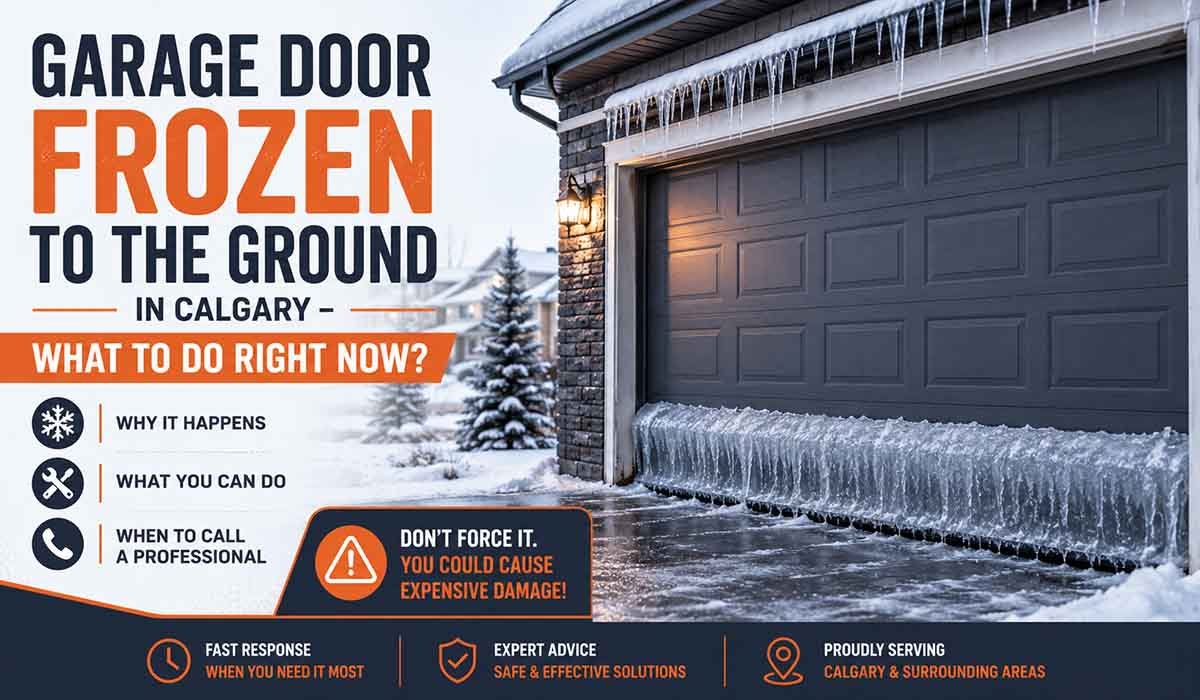
It is 7:30 AM. You have somewhere to be. You press the button and the opener runs, the motor hums, and then the door reverses back down without opening at all. Or it lifts about two inches, stops, and reverses.
Your garage door is frozen to the ground. This happens in Calgary more than most cities because of the overnight temperature swings. The good news is that in most cases you can fix it yourself in under 10 minutes. Here is exactly what to do.
Why It Happens
When a garage door closes, the rubber or vinyl bottom seal presses against the concrete floor. If there is any moisture sitting on the concrete under that seal, and temperatures drop overnight, that water freezes and bonds the seal to the floor. In Calgary, this can happen any night from October through March.
The Auburn Bay and Mahogany lake communities see this more often than other parts of the city because ground-level moisture near the water is higher. That same moisture drives cable corrosion in the lake communities, so a home prone to freezing is often worth a cable check too. Homes with older or cracked bottom seals are also more prone to it, since cracks let moisture sit in more contact points with the concrete.
When the opener tries to pull the frozen door up, the resistance triggers the safety reversal system. The motor detects that something is blocking the door and reverses to avoid damage or injury. This is the system working correctly. The problem is the ice, not the opener.
What to Do Right Now: Step by Step
Step 1: Do Not Keep Pressing the Button
Every time you run the opener against a frozen door, you are putting load on the motor and potentially stressing the torsion springs. If the door is solidly frozen, the opener will not win that fight and you risk burning out the motor. Press it once, confirm that the door is not opening, and stop.
Step 2: Try the Manual Release First
Pull the red emergency release cord that hangs from the trolley on the ceiling rail. This disconnects the door from the opener. Then grab the door handle with both hands and try to pull up firmly. Sometimes the frozen bond is light enough that manual force breaks it without any heat or tools.
Do not yank at it violently. Apply steady upward pressure. If it does not give within a few seconds of firm pulling, move to the next step.
Step 3: Pour Warm Water Along the Base
Get a bucket or kettle of warm water. Not boiling. Water hot enough to melt ice without cracking cold concrete or damaging the bottom seal. Pour it slowly along the base of the door where the seal meets the concrete. Let it sit for 30 to 60 seconds, then try lifting the door manually again.
This works in most cases. The warm water melts the thin layer of ice holding the seal down and the door breaks free easily.
Do not use boiling water directly on the bottom seal. Extreme heat can warp or crack vinyl and rubber seals, which means you will need to replace the seal sooner than necessary.
Step 4: Use a Heat Gun or Hair Dryer
If warm water does not do it, a heat gun or hair dryer run along the base of the door will melt the ice. Keep the heat moving rather than holding it in one spot to avoid damaging the seal material. This takes 2 to 3 minutes.
Step 5: Chip the Ice Carefully
If you have significant ice buildup rather than just a thin frozen bond, a plastic scraper or wooden wedge worked carefully along the base can break the seal. Avoid using a metal screwdriver or chisel directly against the seal itself since it will cut into the rubber or vinyl and shorten its life.
Step 6: Reconnect the Opener and Test
Once the door moves freely by hand, reconnect the opener by pulling the release cord back toward the door or re-engaging the trolley (depending on your opener model). Run the door through a full open-close cycle before you drive out to make sure it is operating normally.
How to Stop It From Happening Again
A one-time freeze is usually just bad luck with moisture and temperature. If it is happening regularly, there are a few things worth checking.
Check the Bottom Seal
A cracked, hardened, or torn bottom seal holds more ice because water gets into the cracks and freezes there rather than just at the surface. If your seal is older than 4 to 5 years in Calgary’s UV and cold conditions, it may be ready to replace. A new seal costs $80 to $160 installed and it resolves most recurring freeze problems.
Vinyl seals with a T-slot or T-end design tend to hold up better in Calgary winters than standard rubber, and they freeze to the concrete less readily. Seal wear is one of several things Calgary’s weather is hard on, which we cover in the complete Calgary garage door guide.
Apply a Silicone-Based Seal Lubricant
Spraying a light coat of silicone lubricant along the bottom of the seal before winter reduces the surface tension between the seal and the concrete. This does not eliminate freezing in severe conditions but it makes the bond weaker and easier to break manually. Do this once in late October and again after major thaw-refreeze cycles.
Check Your Concrete for Low Spots
If water consistently pools near the base of the door before it freezes, there may be a low spot in your garage floor near the door opening. Water draining toward the door rather than away from it will freeze there every night it gets cold enough. A concrete leveling compound can fix minor low spots. For significant drainage problems, it is worth talking to a concrete contractor.
Adjust Your Opener’s Down Force Setting
Some openers can be set to push down harder on the closing cycle, which compresses the seal more firmly against the concrete and leaves less space for water to pool underneath. Check your opener manual for the down force adjustment. But do not set it so high that the door compresses forcefully against the floor; this wears out the seal faster.
When the Door Is Frozen Open
A door stuck in the open position is a different situation and it needs faster attention. If the door is open and frozen in place due to ice in the tracks or a frozen cable, you are looking at a security issue and a heating problem.
In this case, do not try to force the door down manually. Ice inside the track can bend the track if the door is forced. Call for service. A stuck-open door in Calgary in January is an emergency call, not something to leave until business hours.
When to Call for Help
Most frozen-door situations resolve with warm water and a few minutes of patience. Call a technician if:
- The door will not move after multiple attempts with heat and manual pressure
- You hear a grinding or snapping sound when the door finally breaks free, which can mean a cable or spring stressed during the freeze
- The door is frozen in the open position
- After freeing the door, the opener sounds strained or the door moves unevenly
- This is happening every night, which points to a seal or drainage problem that needs a proper fix rather than a daily morning routine
Call Fish Creek Garage Door Repair Calgary at 587 893 3737 for same-day service across Calgary.
